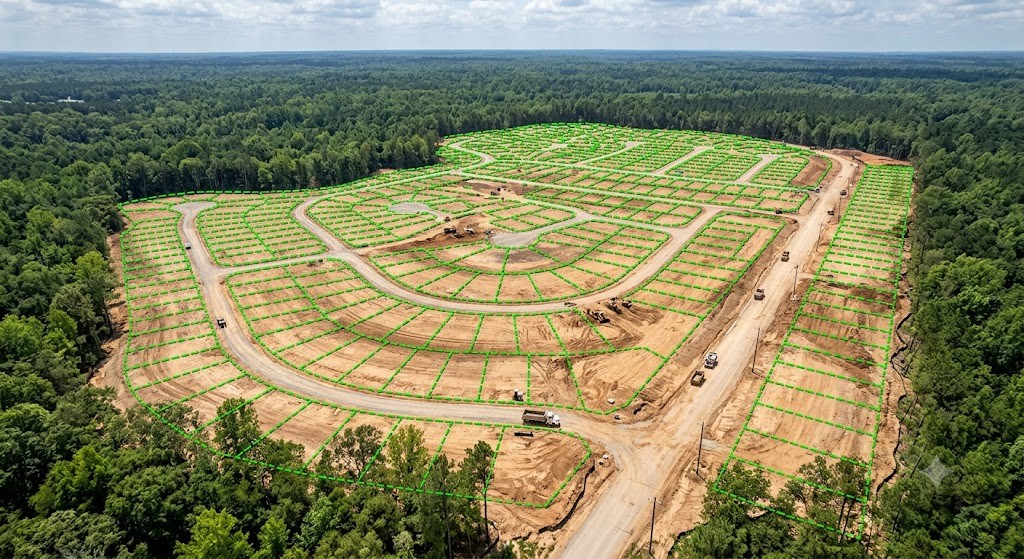
If you want to know where America's housing supply is heading, stop looking at building permits and start following the lots.
Locate Alpha tracks new residential subdivisions as they come online across the entire country, along with the number of new lots created within each one. Unlike permits or completions, new lots represent the earliest stage of the supply pipeline — not what has already been built, but what is about to be. It's one of the most forward-looking signals available in housing data.
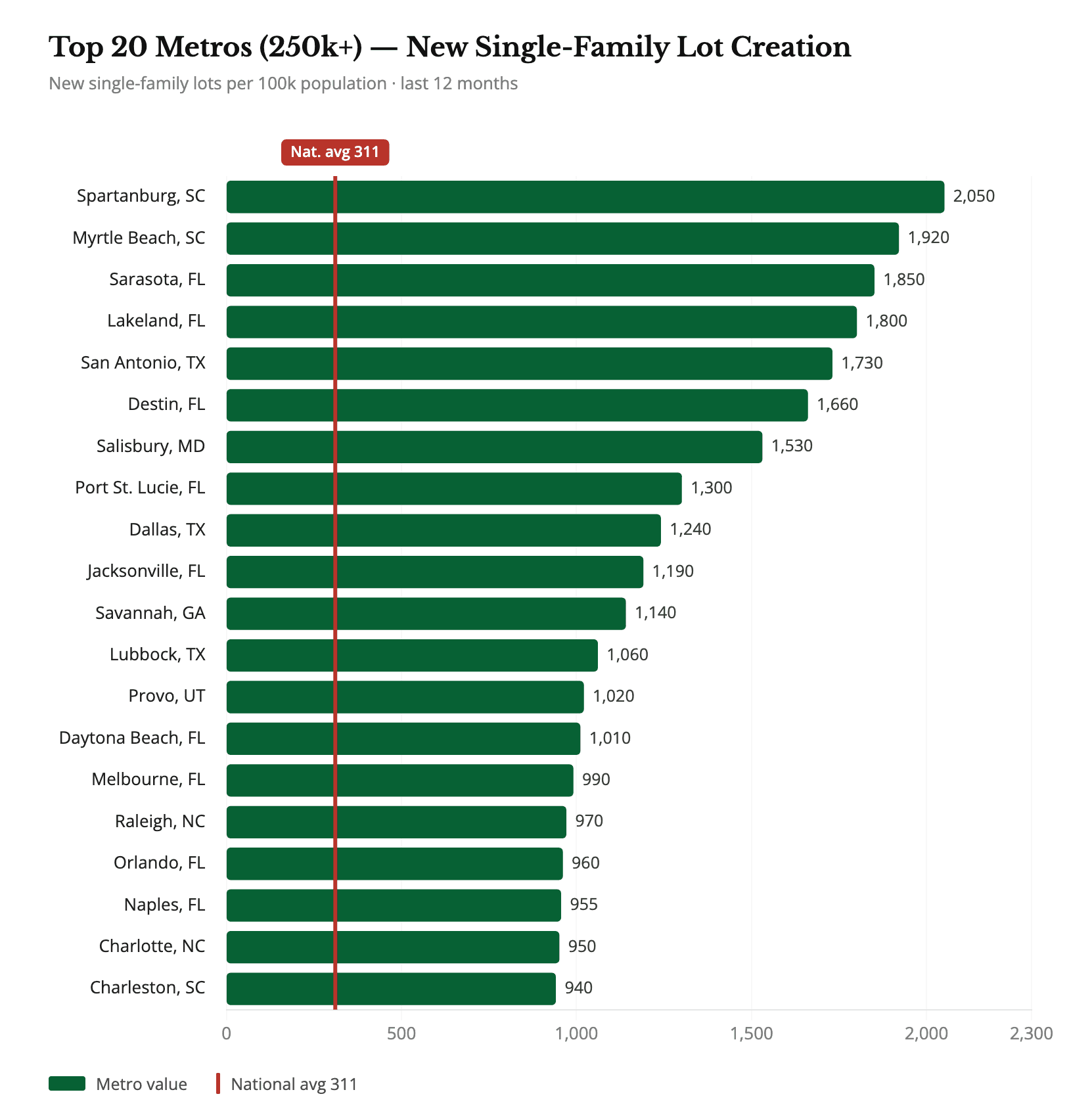
We ranked every major U.S. metro by new single-family lots created over the last 12 months, normalized per 100,000 residents. Here's what the data shows.
The Sun Belt Dominates
The future of single-family housing supply is unmistakably concentrated in the Sun Belt. Florida, the Carolinas, Texas, and Utah collectively dominate the top 20, led by Spartanburg, Myrtle Beach, and Sarasota. Florida alone claims nine of the top 20 spots — a remarkable concentration that signals just how much of the country's residential pipeline is flowing into that one state.
As a group, these metros are creating lots at more than four times the national average of roughly 310 per 100,000 residents. That's not a modest outperformance — it's a structural shift in where American housing is being built.
Migration Is the Engine
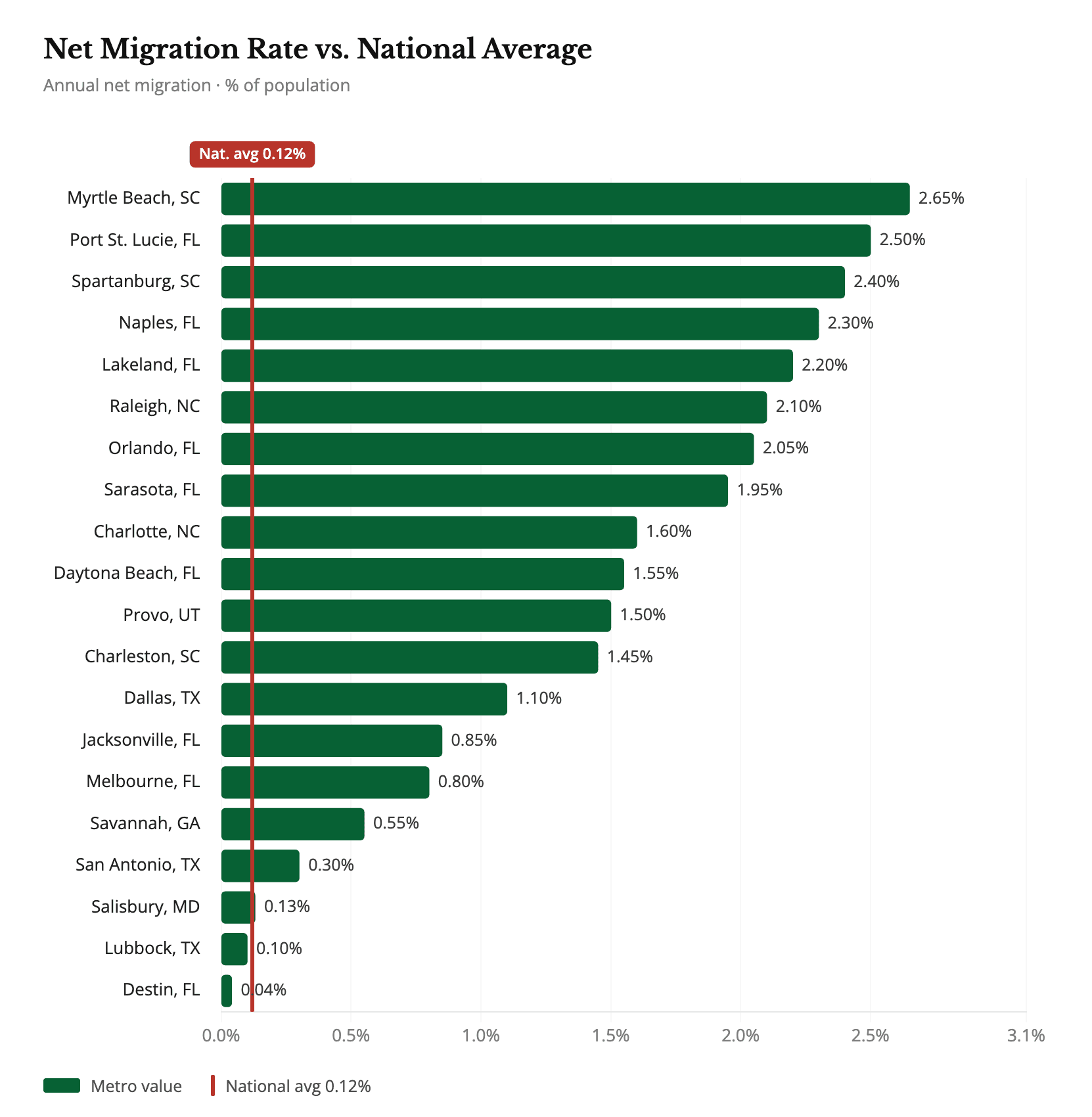
The "why" behind these numbers is straightforward: people are moving there. Eighteen of the top 20 metros post net migration above the national rate, and the group's average inflow runs about twelve times the U.S. norm.
While a typical U.S. metro barely grows through migration — around 0.1% annually — the top 20 average around 1.4%. Myrtle Beach, Port St. Lucie, and Naples stand out even within this group, pulling in new households faster than almost anywhere else among large metros. Builders aren't betting on speculation; they're responding to real, sustained demand.
Regulation Isn't the Full Story
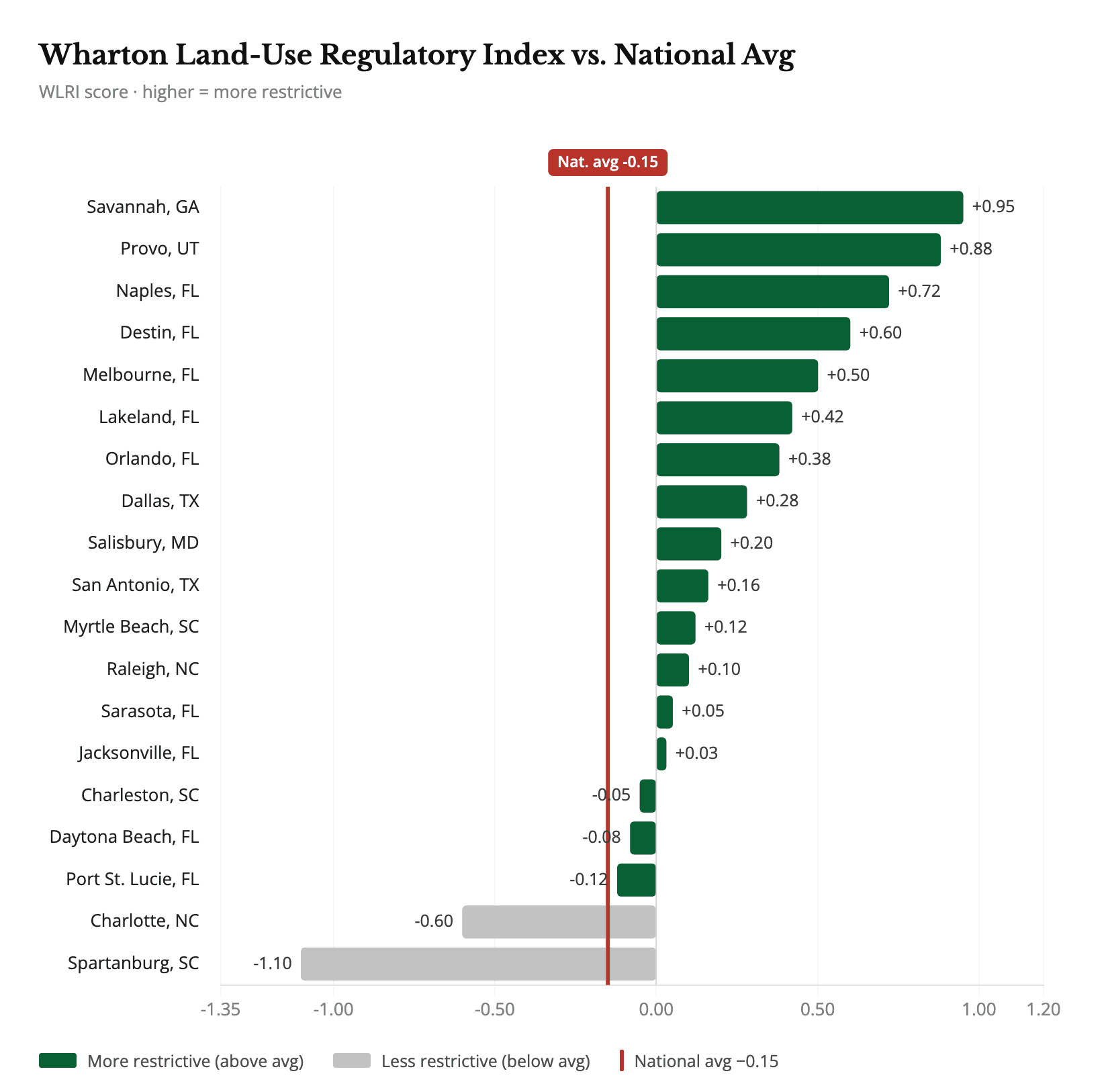
A common assumption about high-growth Sun Belt markets is that they're easy places to build. The data complicates that narrative. Most of the top 20 score above the national average on the Wharton Land-Use Regulatory Index, meaning they're not the most permissive environments for development. Entitlements, zoning changes, community input, and permit timelines all create friction.
But demand is intense enough that lots are getting created anyway. A few standouts — Spartanburg and Charlotte — genuinely do score as easier markets in which to develop, but they're the exception, not the rule. The broader takeaway is that strong migration can overcome moderate regulatory headwinds.
Retail Is Already Moving In
One more confirming signal: national chain-restaurant openings across these metros run roughly 40% above the national average. Everyday retail follows rooftops. When national brands are already staking out locations in a growth corridor, it's a strong signal that they've underwritten the same demographic thesis the lot data is telling us.
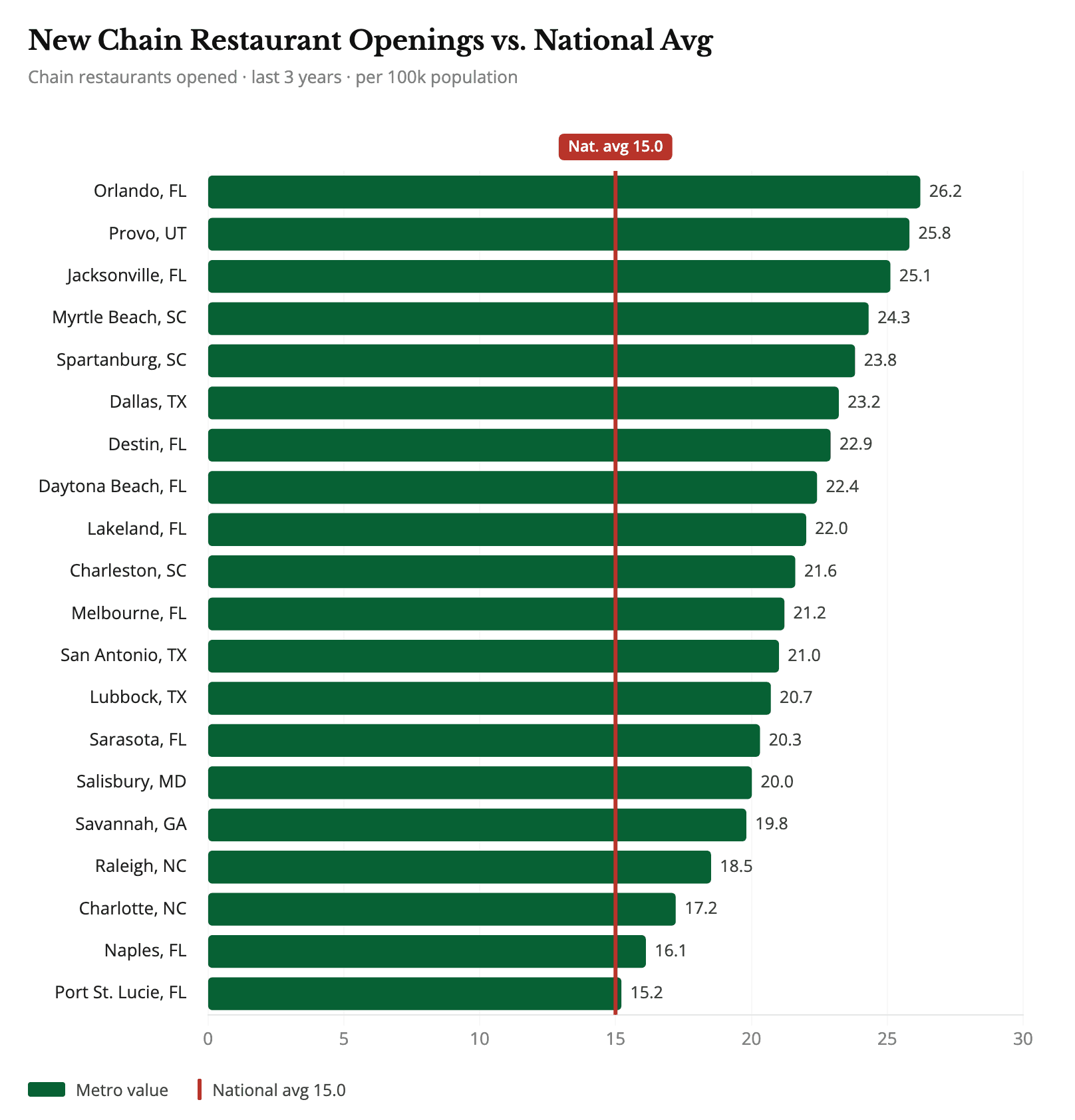
Among America's major metros, future single-family supply is concentrating where migration is strongest — strong enough to overcome moderate regulation — and everyday retail is already moving in behind it. These are the markets to watch.