Homebuilder
ADU
The ADU Buildability Question: Where to Build, and Which Parcels Qualify
Why This Matters
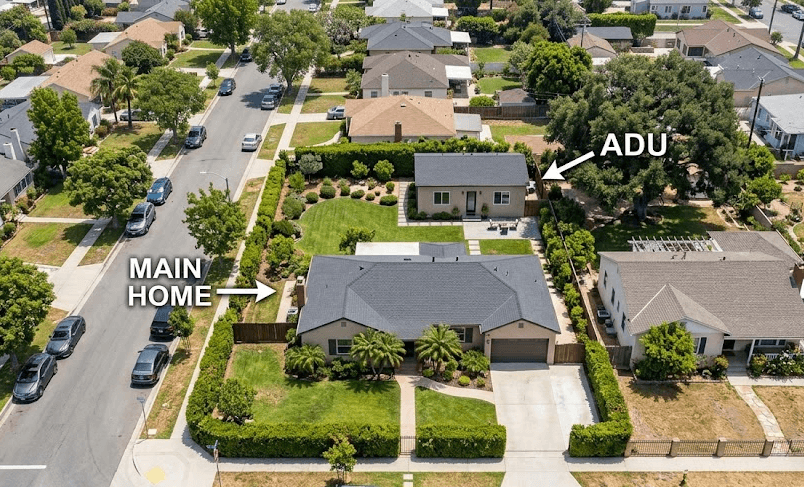
If you're doing infill development in California, you're working in one of the most supply-constrained housing markets in the country. Land is expensive, ground-up development is slow, and the regulatory environment slows down new supply. Accessory dwelling units have emerged as a mechanism for adding supply without the friction of a full development cycle. State law has steadily made them easier to build, and a growing share of California's incremental housing supply now comes from ADUs added to existing single family and multifamily parcels.
That creates an obvious opportunity for builders who want to get into the ADU business. But two practical problems stand in the way of acting on it at scale.
The Problem
First: where are ADUs actually allowed and getting approved? State law sets a baseline, but local jurisdictions vary widely in how they handle ADU applications. Some cities turn permits around in a matter of weeks. Others take many months. Some have built infrastructure around ADU approvals; others have not. Knowing which jurisdictions are genuinely permit friendly, as opposed to nominally permissive on paper, is the difference between a workable pipeline and a stalled one.
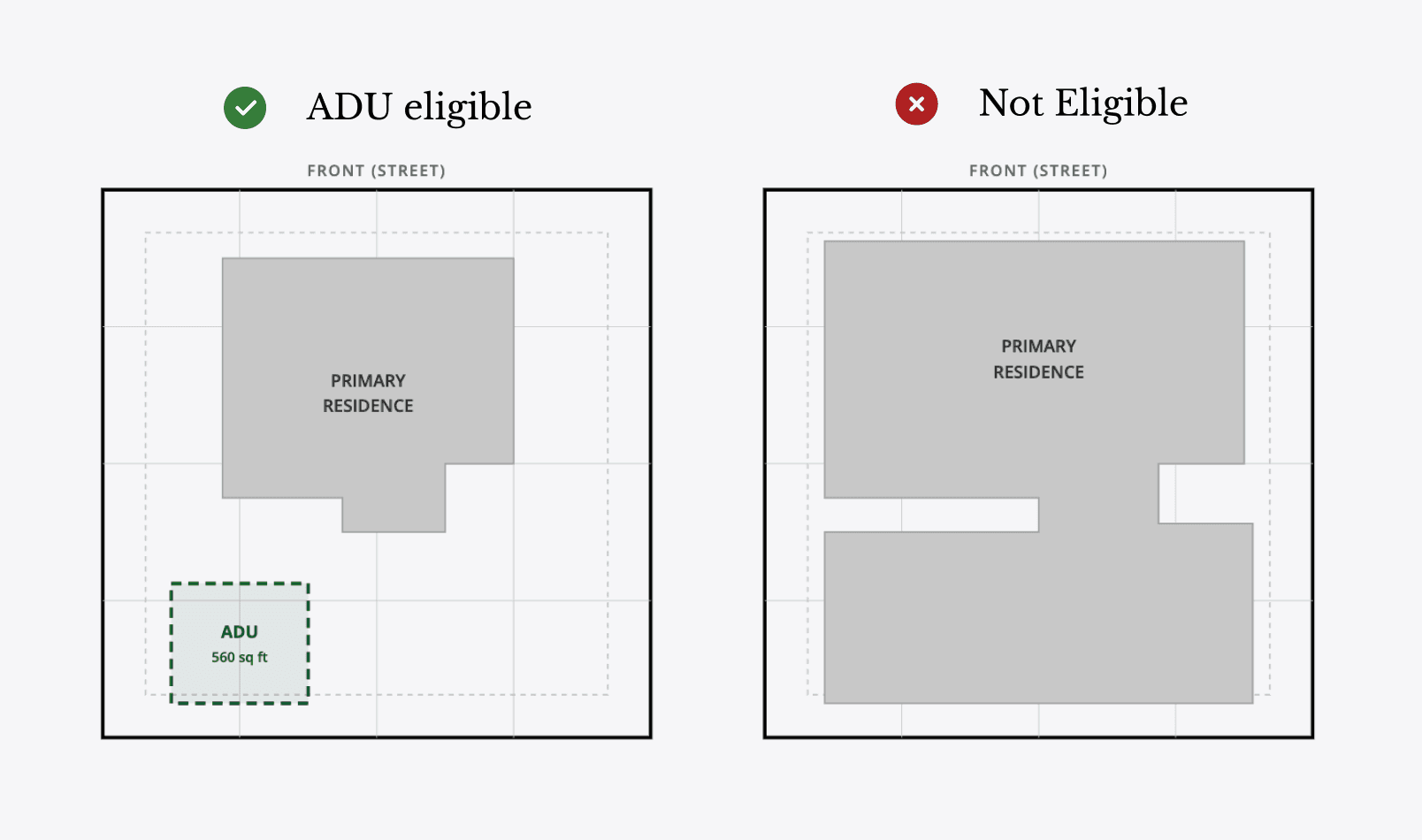
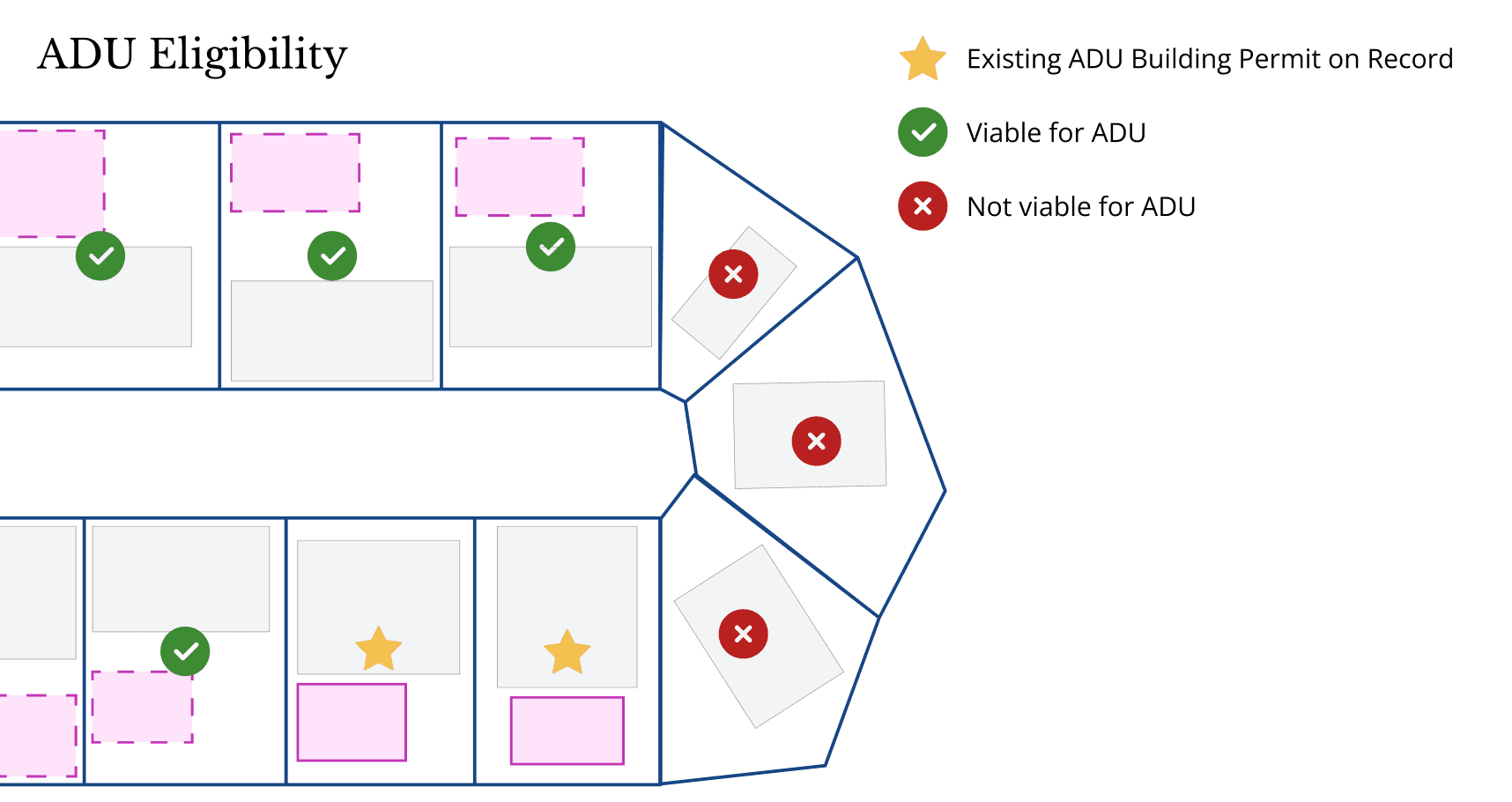
Second: which specific parcels could qualify for an ADU? Even within a permit friendly jurisdiction, not every lot can accommodate one. The lot may be too small. The existing house may sit on the parcel in a way that leaves no usable space. The building coverage ratio may already be too high. High voltage power lines may block crane access. Identifying qualifying parcels by hand, one address at a time, is not a scalable path to a marketing list.
Locate Alpha addresses both problems directly.
The Solution
Traditional solution: We use GIS software to analyze county parallel records and geometry. The data is insufficient to readily calculate coverage ratio, or access, turning it into a large manual exercise.
1. Use Permit History to Identify Where ADUs Are Actually Getting Built
Locate Alpha has incorporated 160 million building permits nationwide. For any radius drawn on the map, users can retrieve five years of ADU permit activity in seconds. A jurisdiction with a high volume of recently approved ADU permits has effectively pre validated itself. Other builders have already navigated the local process and succeeded, which is the strongest available signal that a new project will encounter manageable friction.
The platform also maps median time to approval for new residential construction across jurisdictions, so users can distinguish between cities that move quickly and cities that do not. Targeting marketing spend, sales effort, and pipeline development in jurisdictions where approvals are demonstrably happening, and happening on a workable timeline, removes a substantial source of risk from the front end of the funnel.
2. Use the Built-In Land Search to Identify Qualifying Parcels
Once the right jurisdictions are identified, the next question is which specific parcels within them can accommodate an ADU. Locate Alpha's land search applies multiple filters simultaneously across an entire metropolitan parcel database.
First, the system will search for lots under 0.75 acres that can fit a standard size ADU on the remainder of the lot.
You can specify lot size and shape requirements, set a maximum building coverage ratio to ensure adequate space remains for a new unit, restrict the search to single family, two family, and multi family residential zoning. Automatically exclude parcels near high voltage transmission lines that would preclude crane access. You can also exclude homes with swimming pools. The platform then returns a focused list of parcels that meet all criteria. Analysis that traditionally required desktop GIS software and significant time now executes in approximately ten seconds.
The 800 square foot threshold is worth keeping in mind during this exercise. California's state ADU law creates a ministerial pathway at that size, meaning local jurisdictions cannot deny an application that meets the requirements. Filtering for parcels that can comfortably accommodate an 800 square foot unit produces a list of properties where the regulatory pathway is most predictable.
3. Apply the Same Approach to Multifamily Portfolios
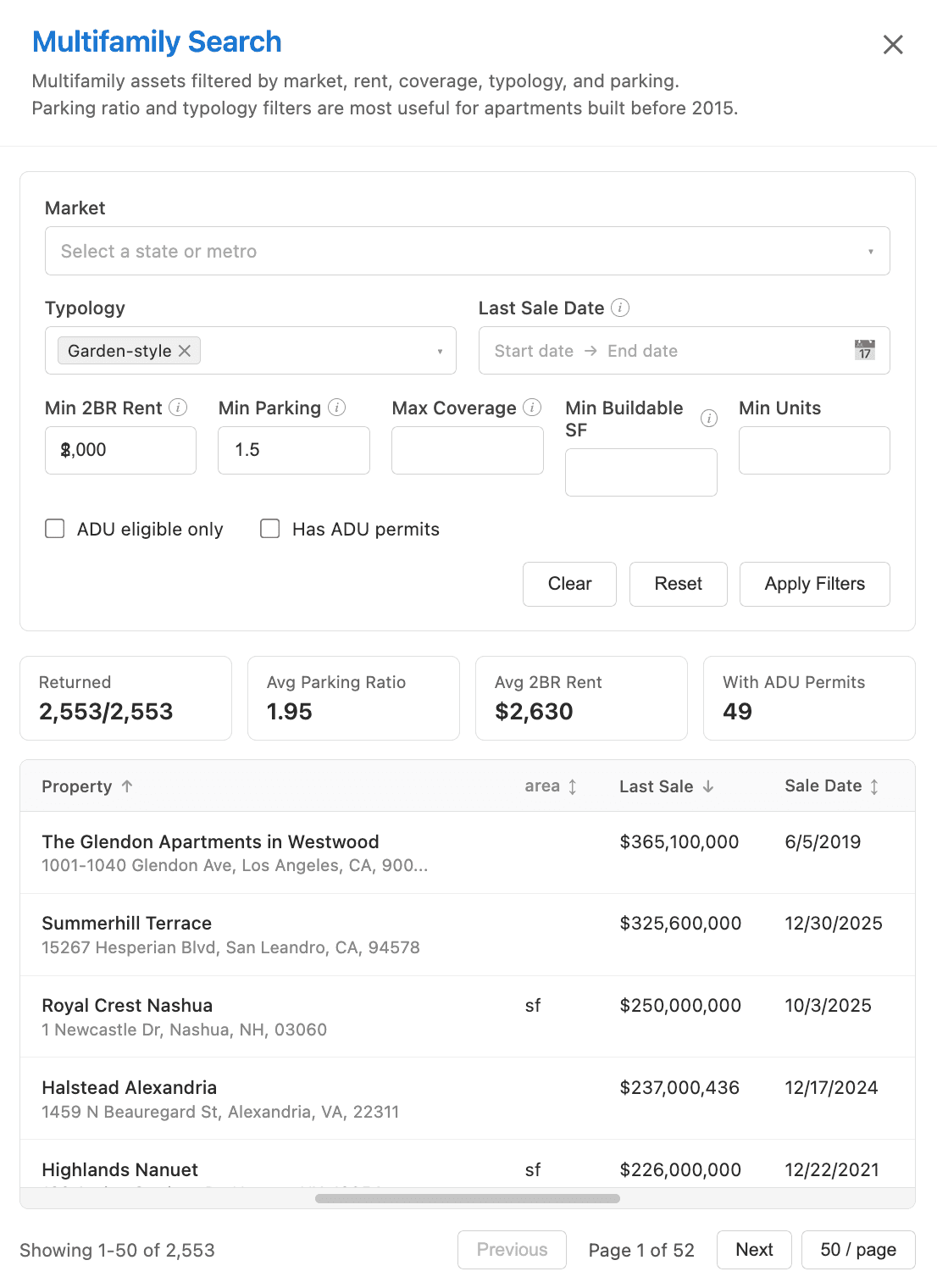
For builders pursuing more ambitious strategies, the same underlying data supports multifamily ADU work. California's SB1211 allows operators to add up to eight ADUs to a multifamily parcel. Operators are increasingly converting underused courtyards, surface parking, and similar spaces into additional rentable units with strong returns on capital.
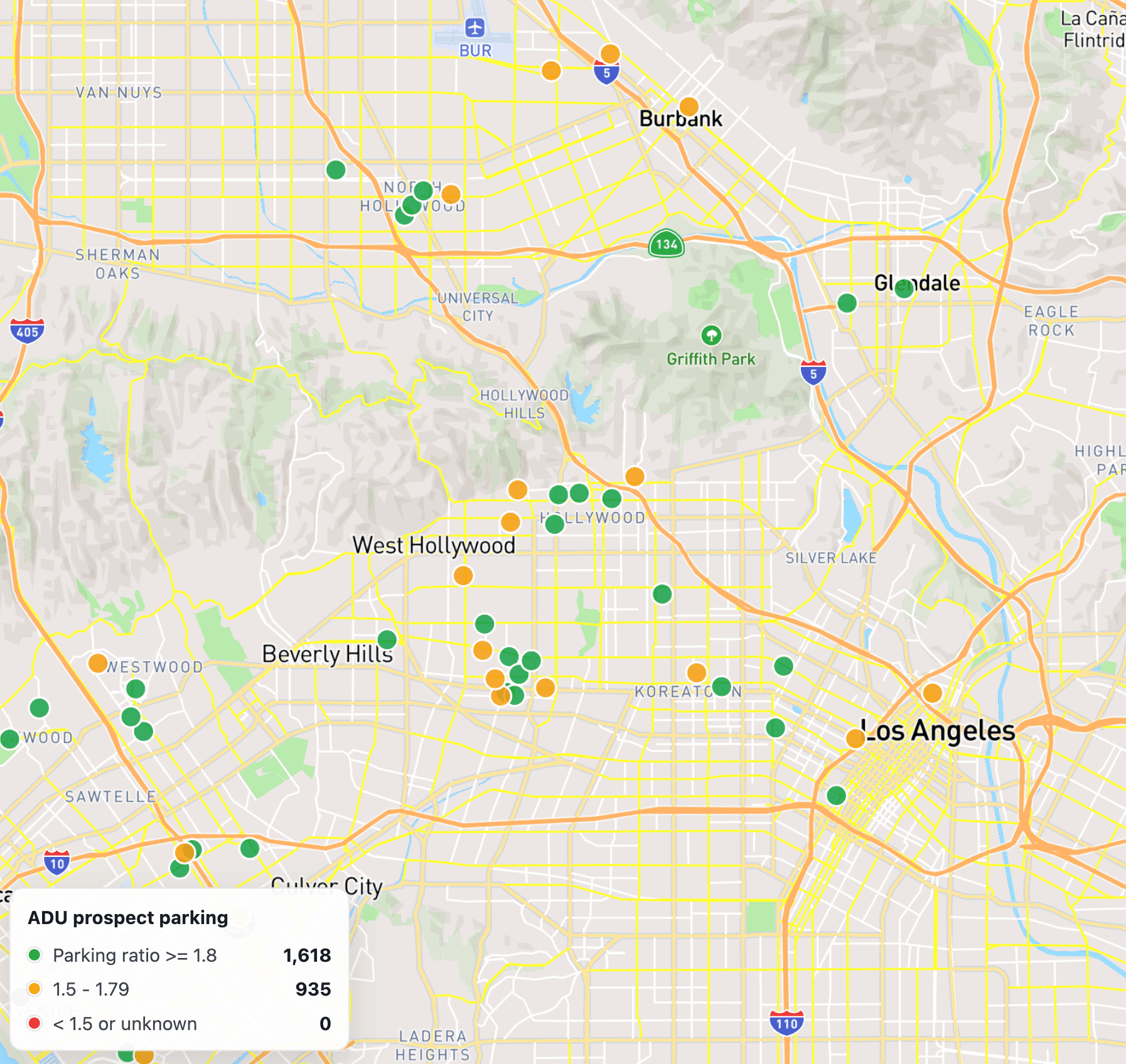
Search for these opportunities directly with Locate Alpha. Users can identify multifamily properties where existing site geometry, parking ratios, and building footprints leave room for additional units. From there, you can apply the same permit history and approval timeline analysis to prioritize the jurisdictions where those projects can move forward efficiently.
The Bottom Line
The two questions that matter for ADU development at scale, where they are allowed and which parcels qualify, are answerable with data. Permit history reveals which jurisdictions are actually issuing approvals. Parcel level filtering reveals which specific properties within those jurisdictions can accommodate a unit. The same approach extends naturally from single family work to multifamily portfolio strategies under SB1211.
Builders who screen for buildability before committing marketing and acquisition resources operate on qualified opportunities. Builders who do not screen up front spend the same dollars across a much larger universe and rely on the funnel to sort it out. The data and the tools to do this work in seconds rather than weeks now exist, and the builders who adopt them earliest will compound the advantage over time.